
The Barbell Strategy: How to Win in an Unpredictable World
Why Content Is Cheap—and Insight Is the Only Moat
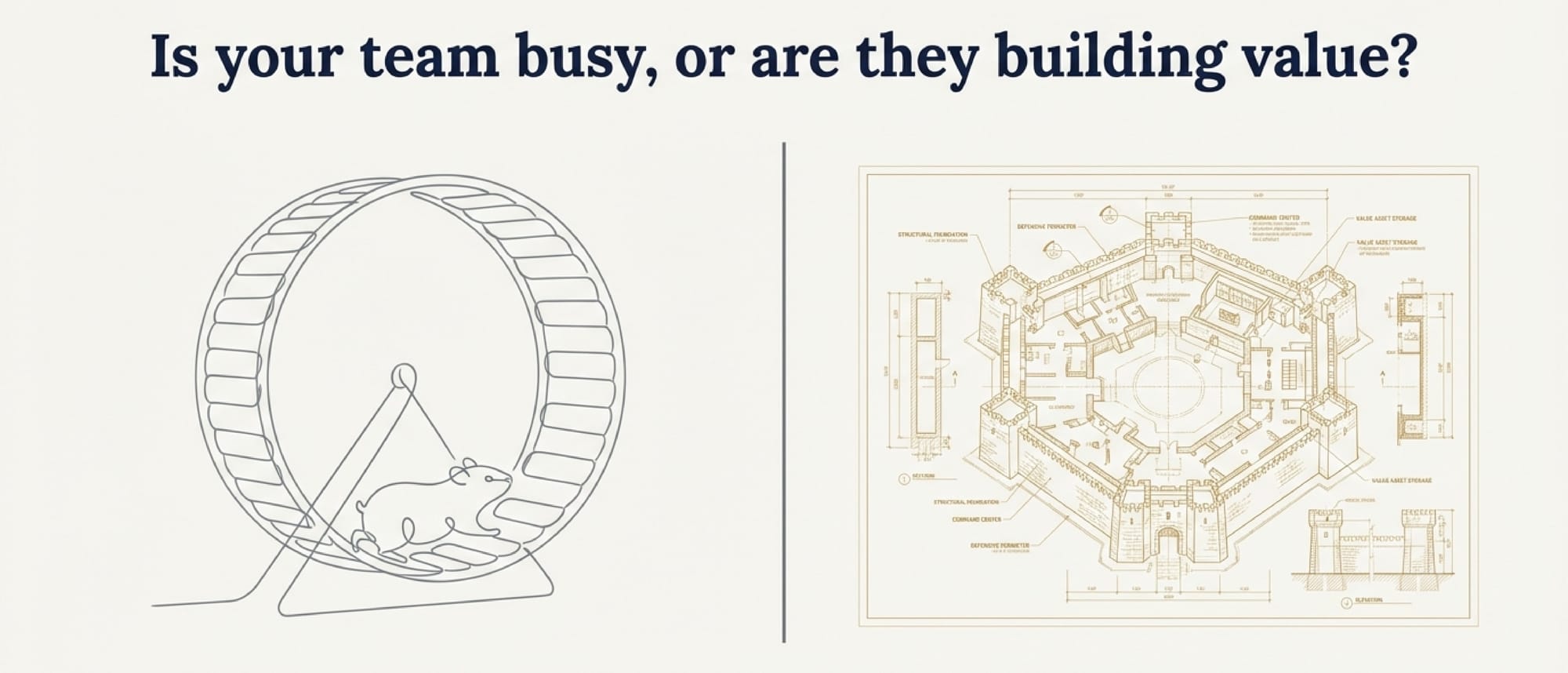
In the modern landscape, there is a dangerous confusion between being busy and building value. Many teams are running faster than ever on a hamster wheel of "rented" data and vanity metrics, only to find themselves standing in the same place at the end of the quarter.
If you want to break out of the cycle and build a competitive moat that lasts, you need a new playbook.
1. The Crisis of the "Activity Trap"
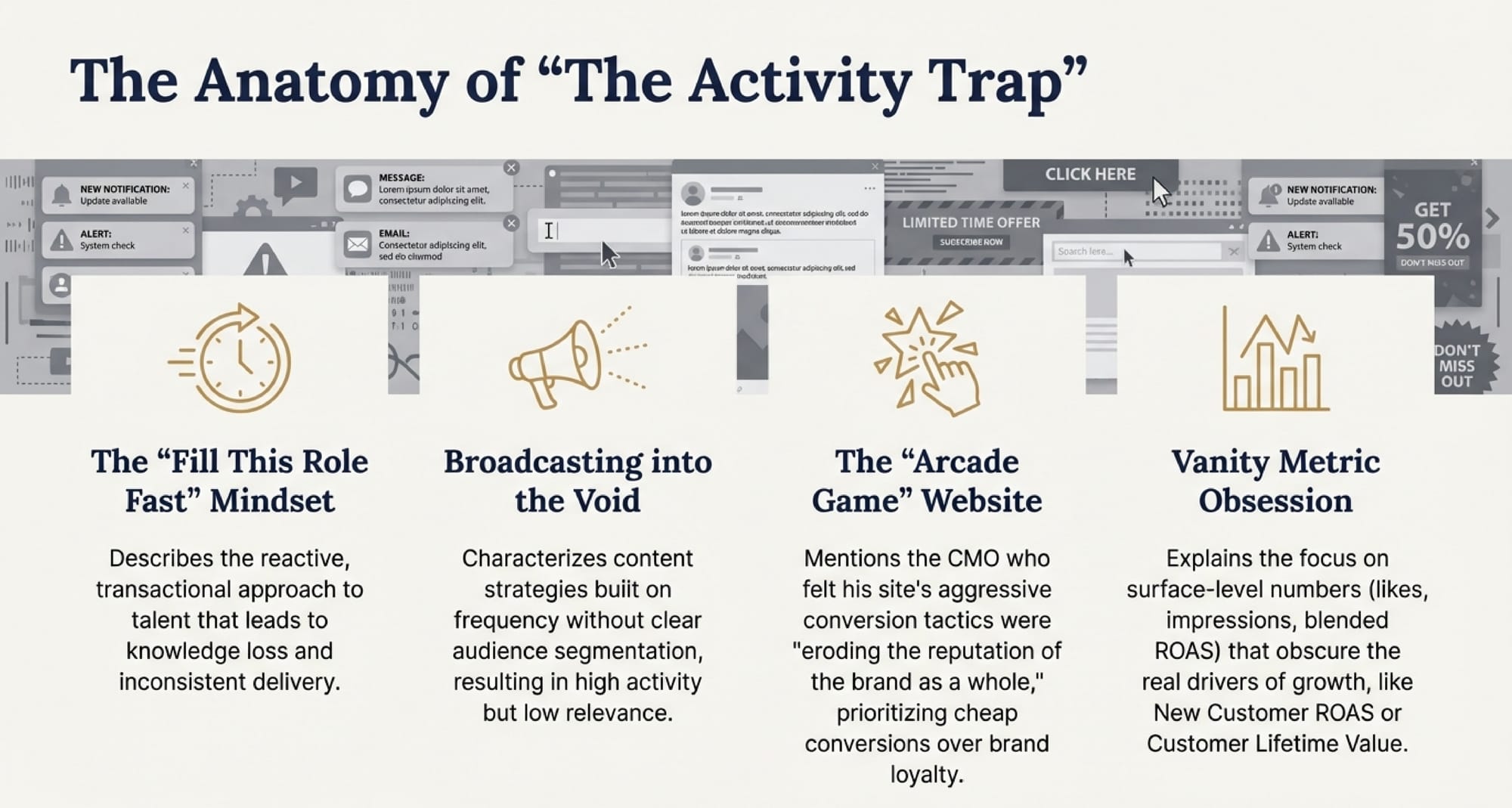
Most organizations are currently stuck in the Activity Trap. This is characterized by a reactive, transactional mindset—filling roles fast, broadcasting generic content into the void, and obsessing over "vanity metrics" like likes or impressions that don't actually drive growth.
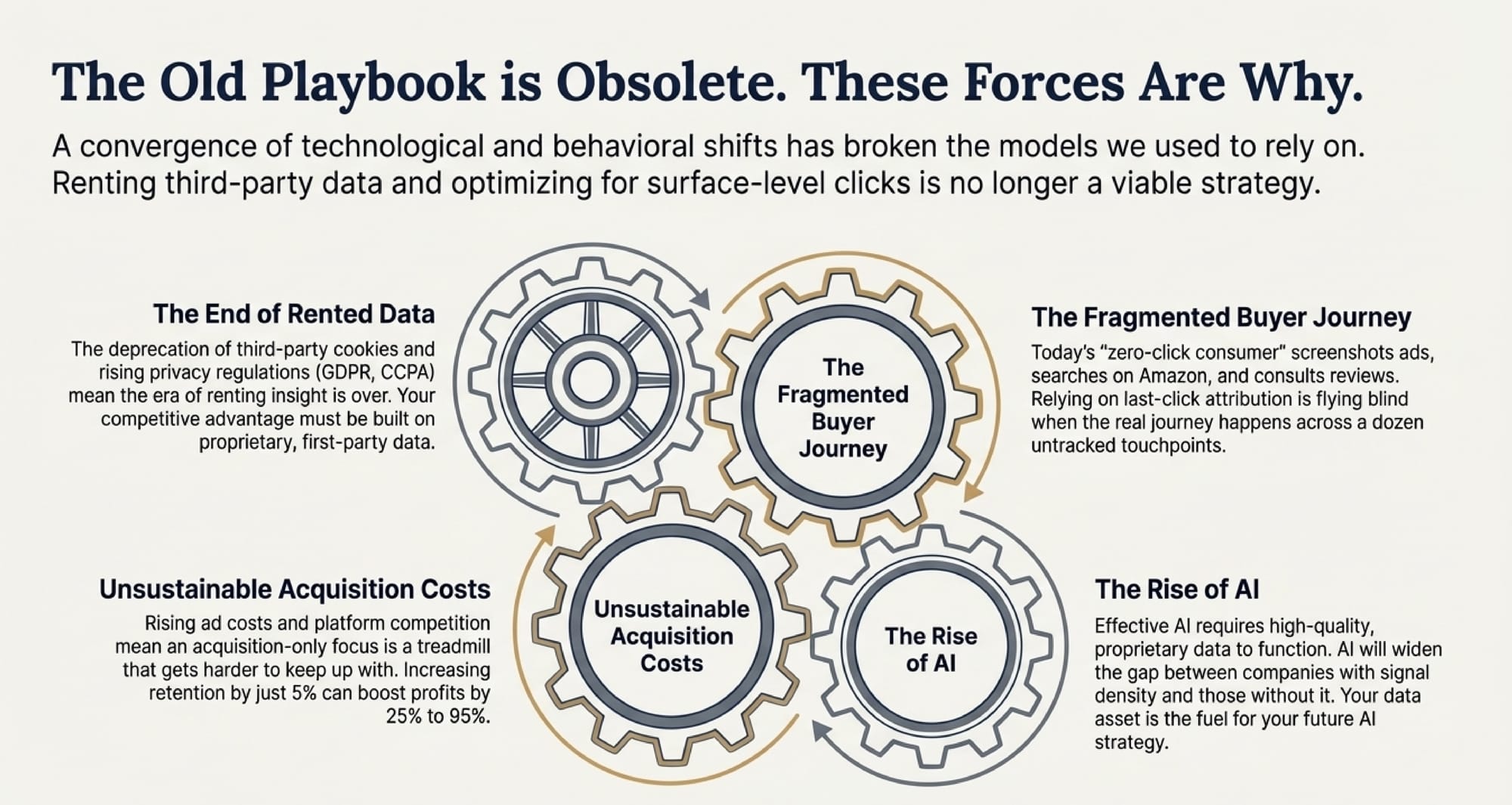
This old way of working is becoming obsolete for four specific reasons:
- The End of Rented Data: Privacy regulations (GDPR, CCPA) and the death of third-party cookies mean you can no longer rely on buying insights.
- Rising Costs: Customer acquisition costs are skyrocketing.
- The Fragmented Journey: Buyers take a dozen untracked paths before buying.
- The Rise of AI: AI requires high-quality, proprietary data to be effective.
2. Introducing the Barbell Strategy
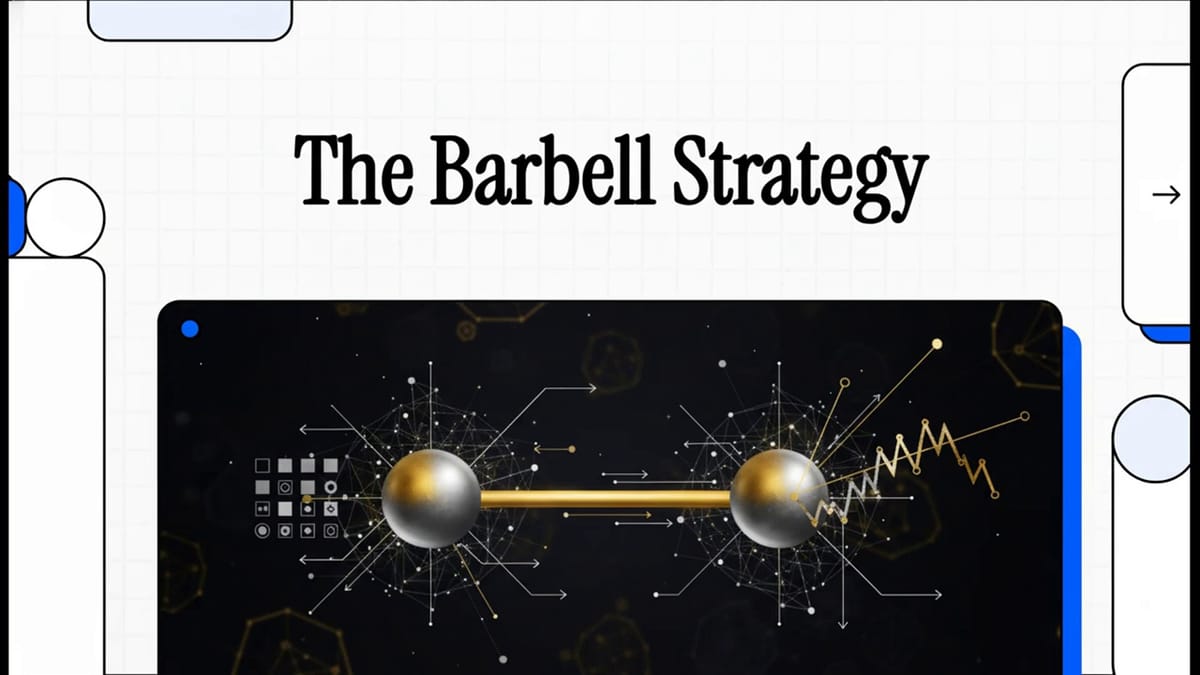
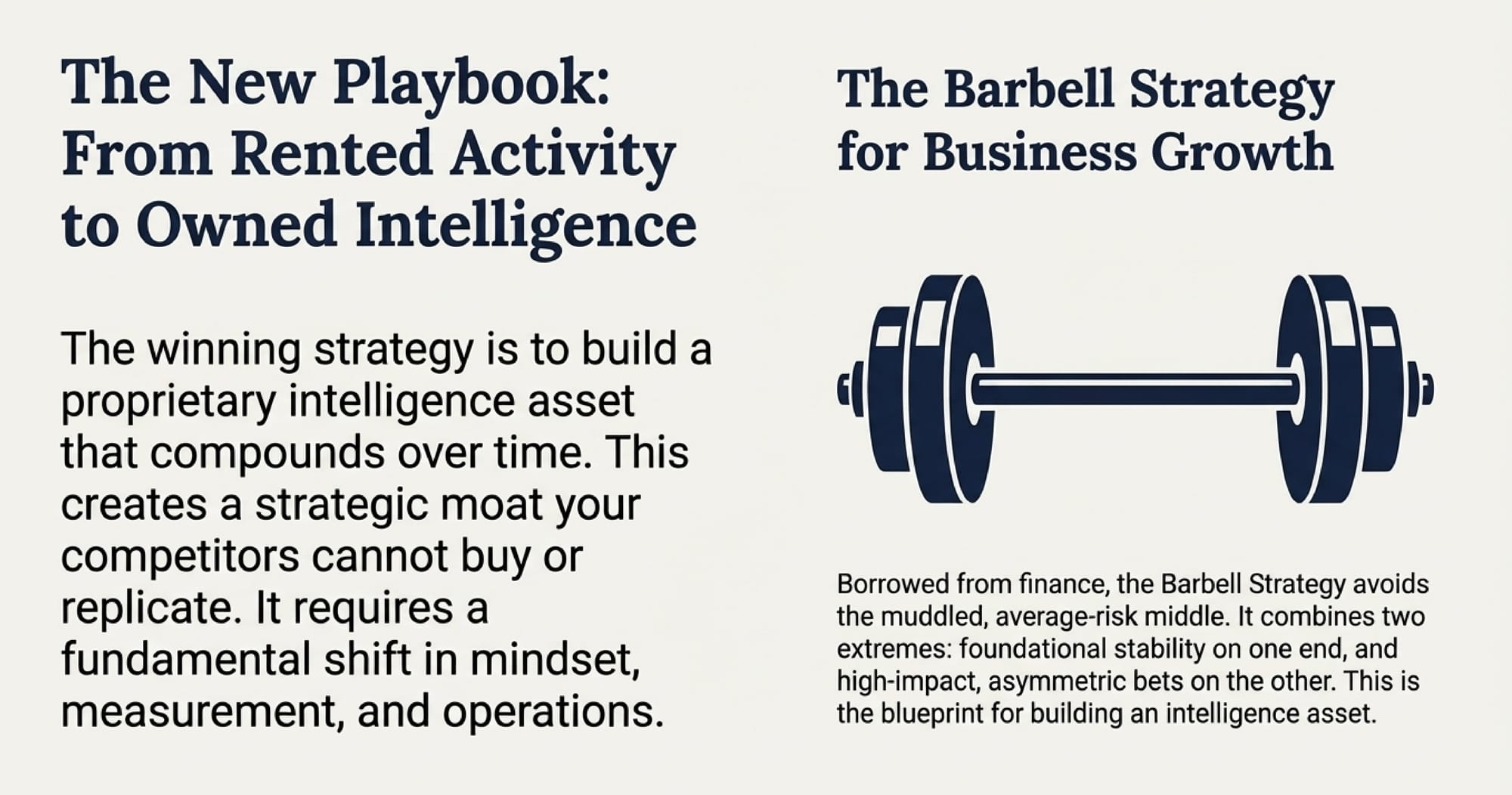
To survive this shift, we look to a concept from finance: The Barbell Strategy. Instead of settling for a "muddled middle" of average risk and average results, the Barbell Strategy balances two extremes:
- The Foundation: Robust, owned intelligence infrastructure.
- The Edge: High-impact, asymmetric "plays" that can lead to massive growth.
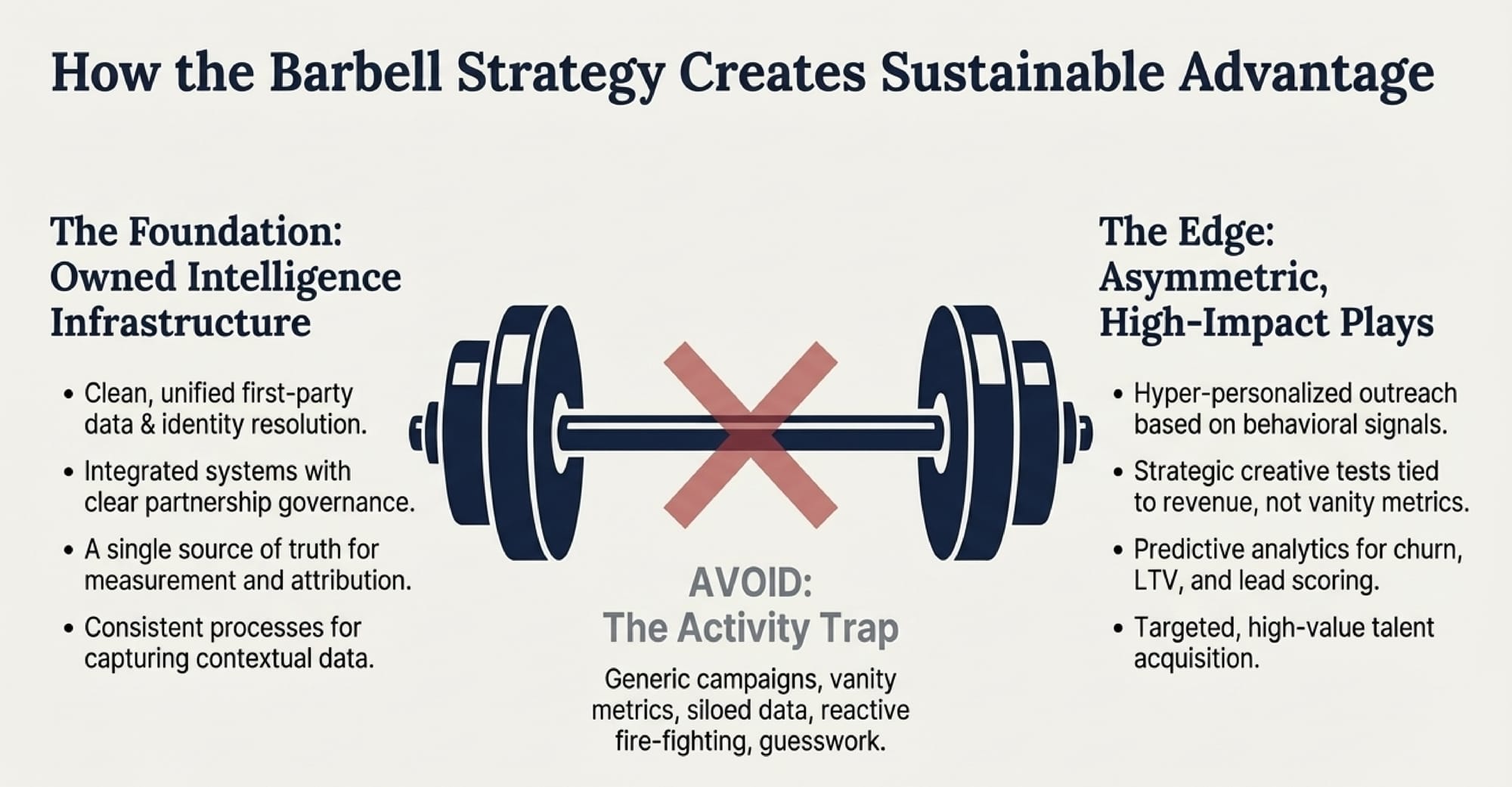
By avoiding the "activity trap" in the middle, you ensure your business has the stability of a fortress and the agility to take big, calculated risks.
3. The Three Principles of Owned Intelligence
To implement this strategy, your team must adopt three core principles.
Principle 1: From Perishable Data to Compounding Intelligence
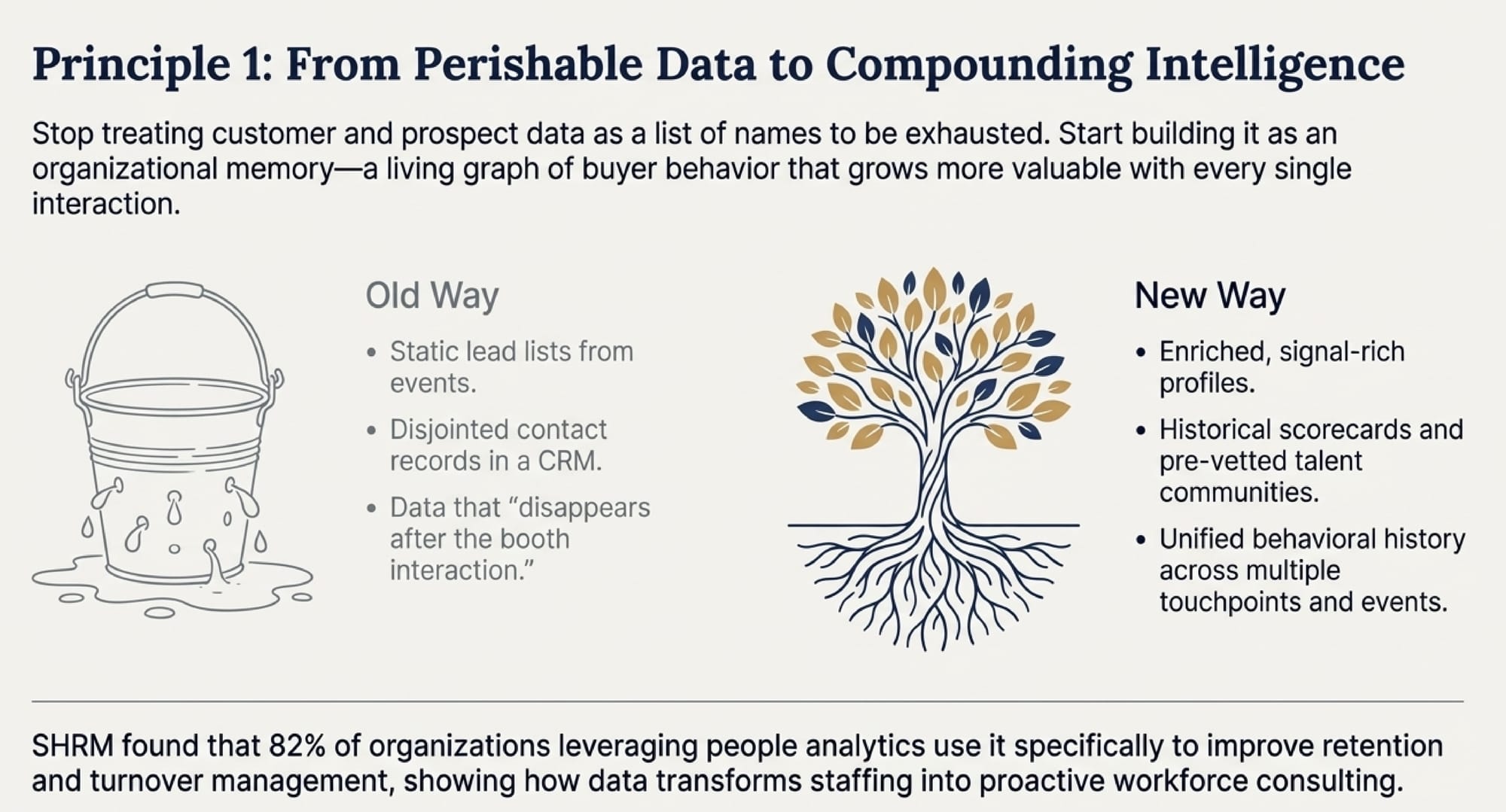
Stop treating customer data like a "bucket" of names to be exhausted. Instead, treat it like a tree. While a bucket eventually runs dry, a tree grows more valuable and stable with every interaction.
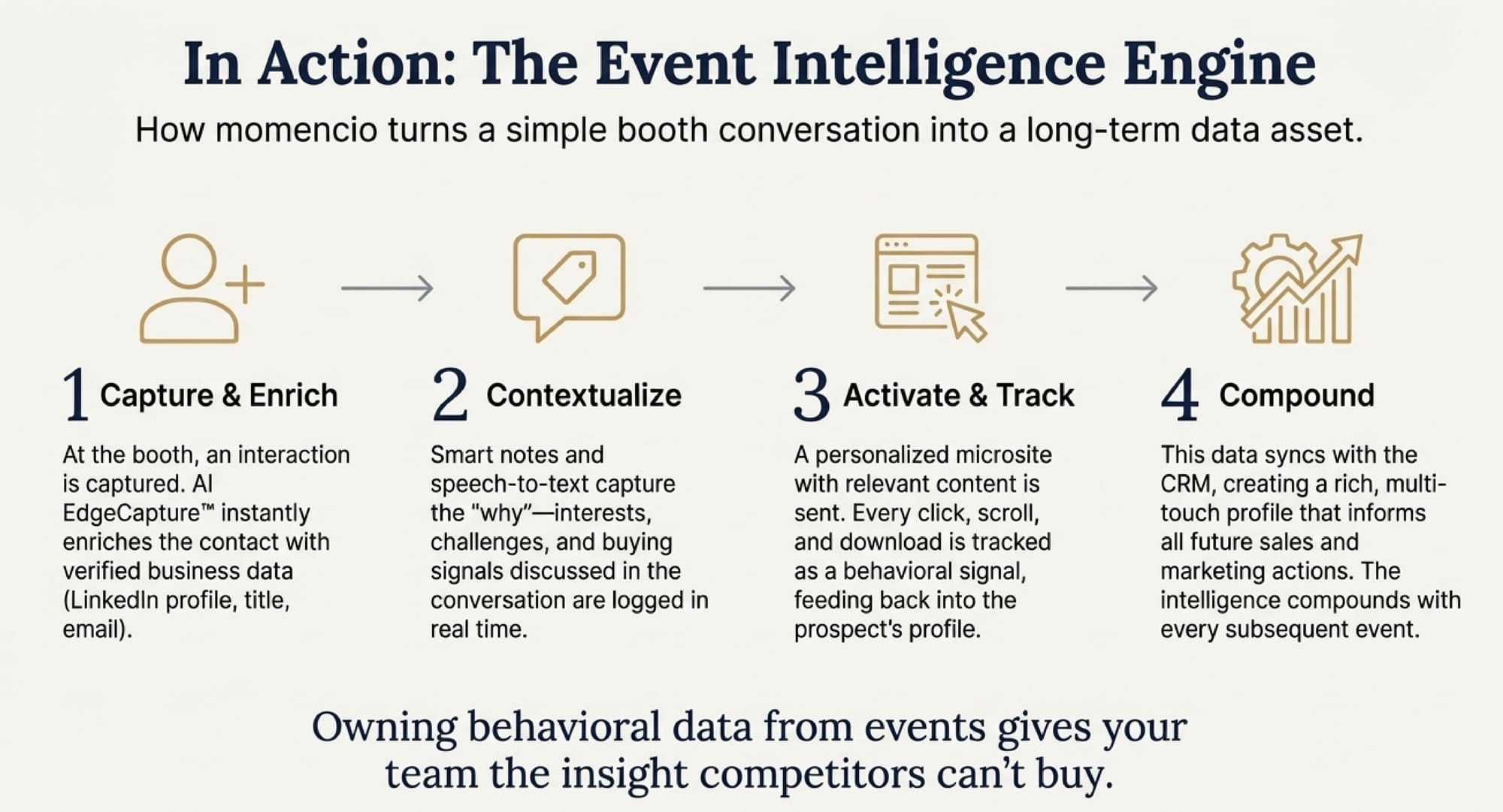
Consider an "Event Intelligence Engine." Instead of a booth conversation being a one-off interaction, use AI to capture context, activate personalized microsites, and sync that behavioral data back to your CRM to inform every future sale.
Principle 2: From Funnel Metrics to Full-Journey Value
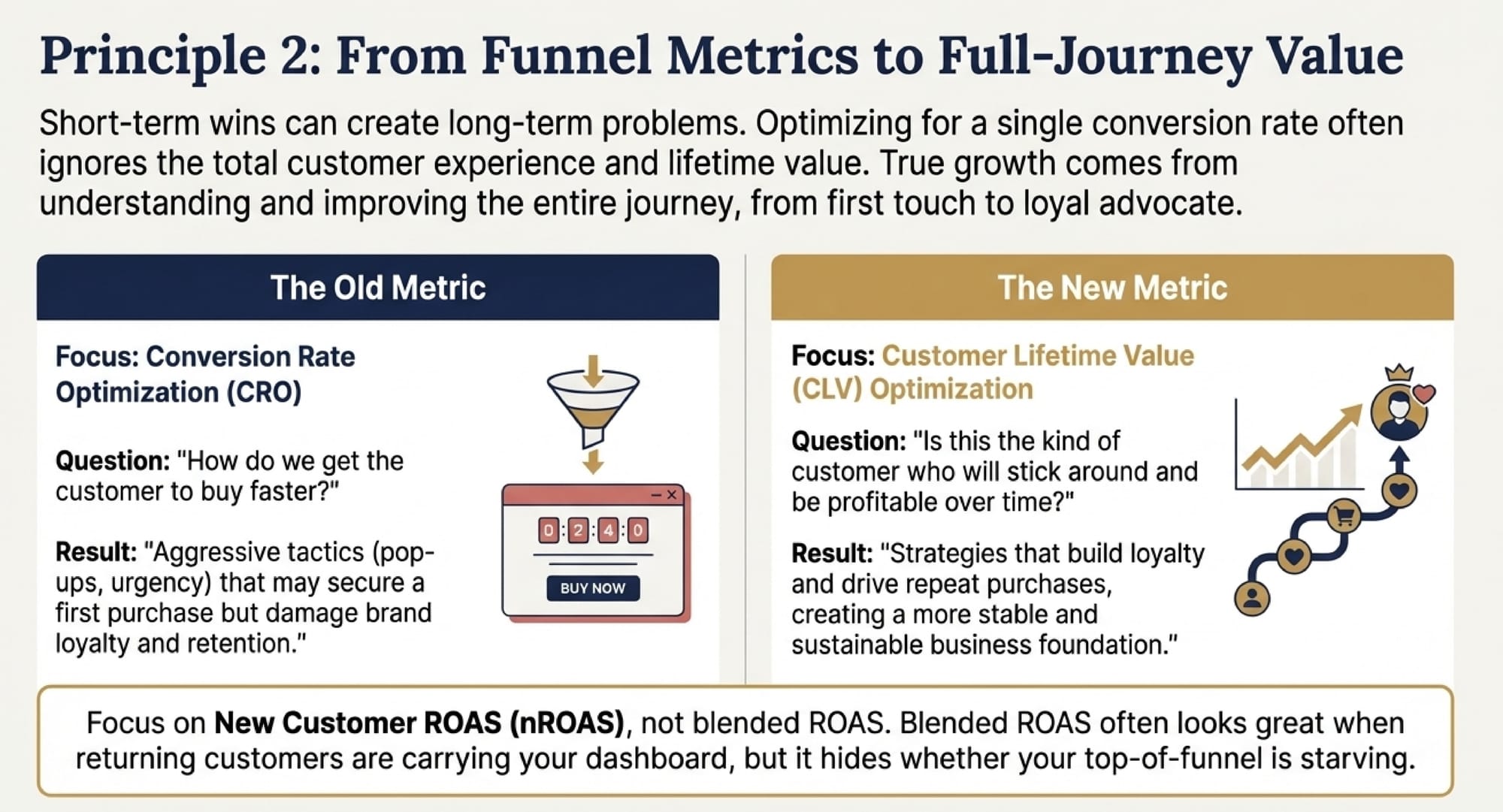
Optimization often focuses on the "buy" button. But true growth comes from understanding the entire journey—from the first touch to the loyal advocate. We must move from Conversion Rate Optimization (CRO) to Customer Lifetime Value (CLV) Optimization.
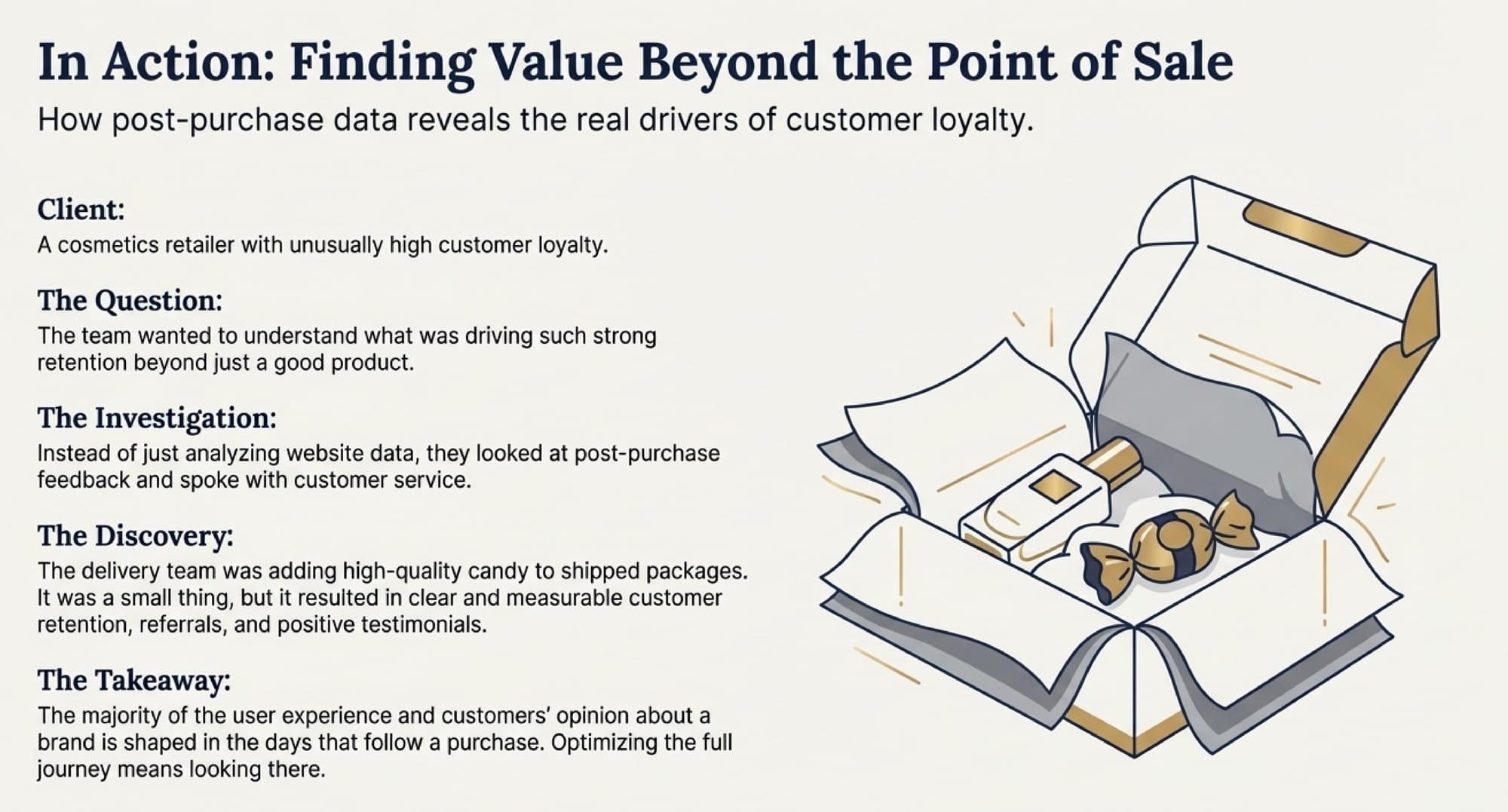
Imagine a cosmetics retailer found that their highest loyalty didn't come from the checkout page, but from a small "post-purchase" detail: adding high-quality candy to shipped packages. This small touch-point drove referrals and testimonials that no "urgent" pop-up could ever match.
Principle 3: From Isolated Tactics to Integrated Systems
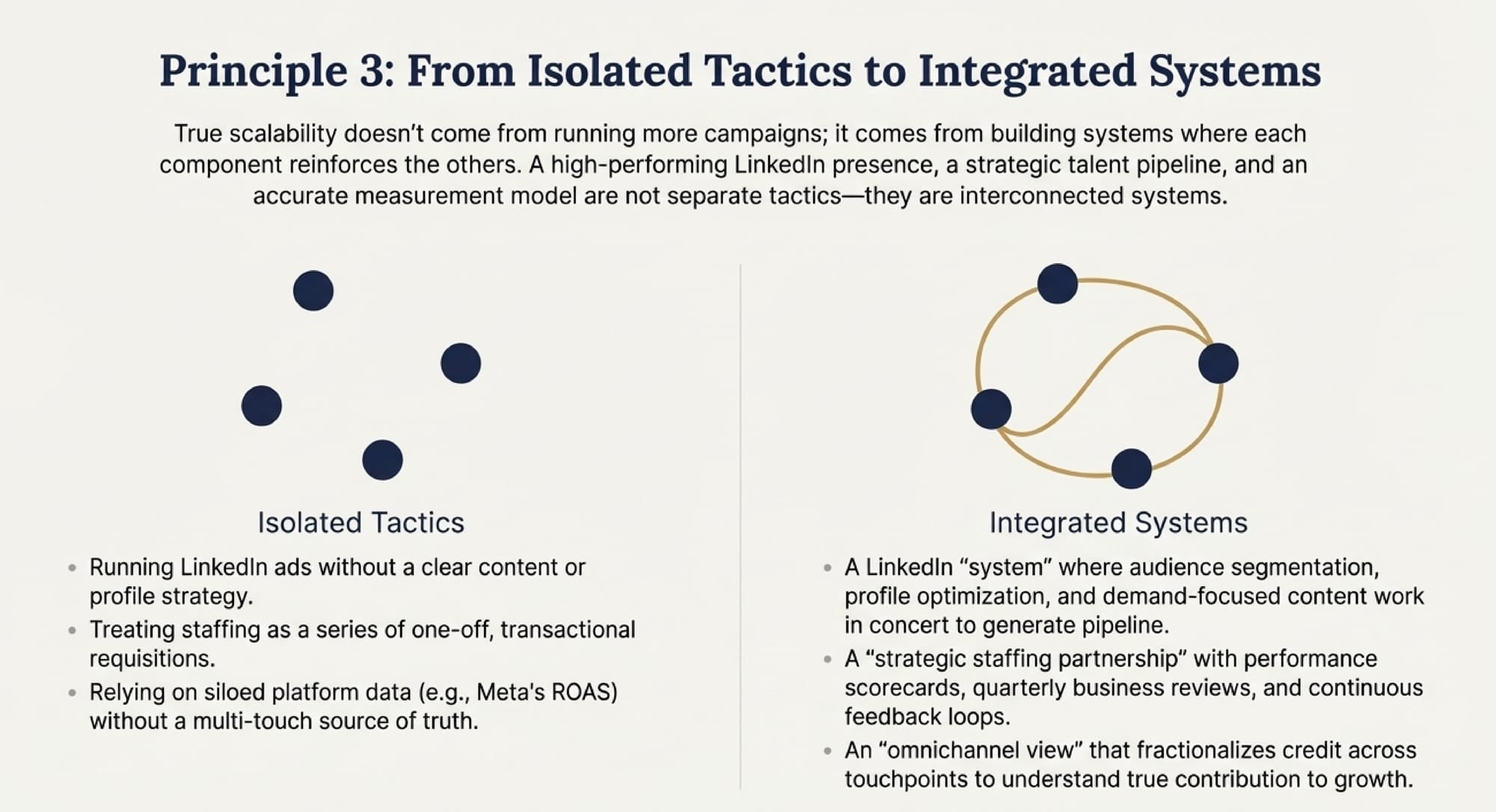
Scalability doesn't come from running more campaigns; it comes from building integrated systems. A high-performing LinkedIn presence, a talent pipeline, and an accurate measurement model should not be separate silos. They must be a connected network where each component reinforces the others.
Principle 3 In Action: The Strategic Talent Partnership System
Moving from isolated tactics to integrated systems is perhaps most visible in how an organization handles its people. Instead of treating staffing as a series of one-off, reactive transactions, a systemic approach creates a Strategic Talent Partnership.
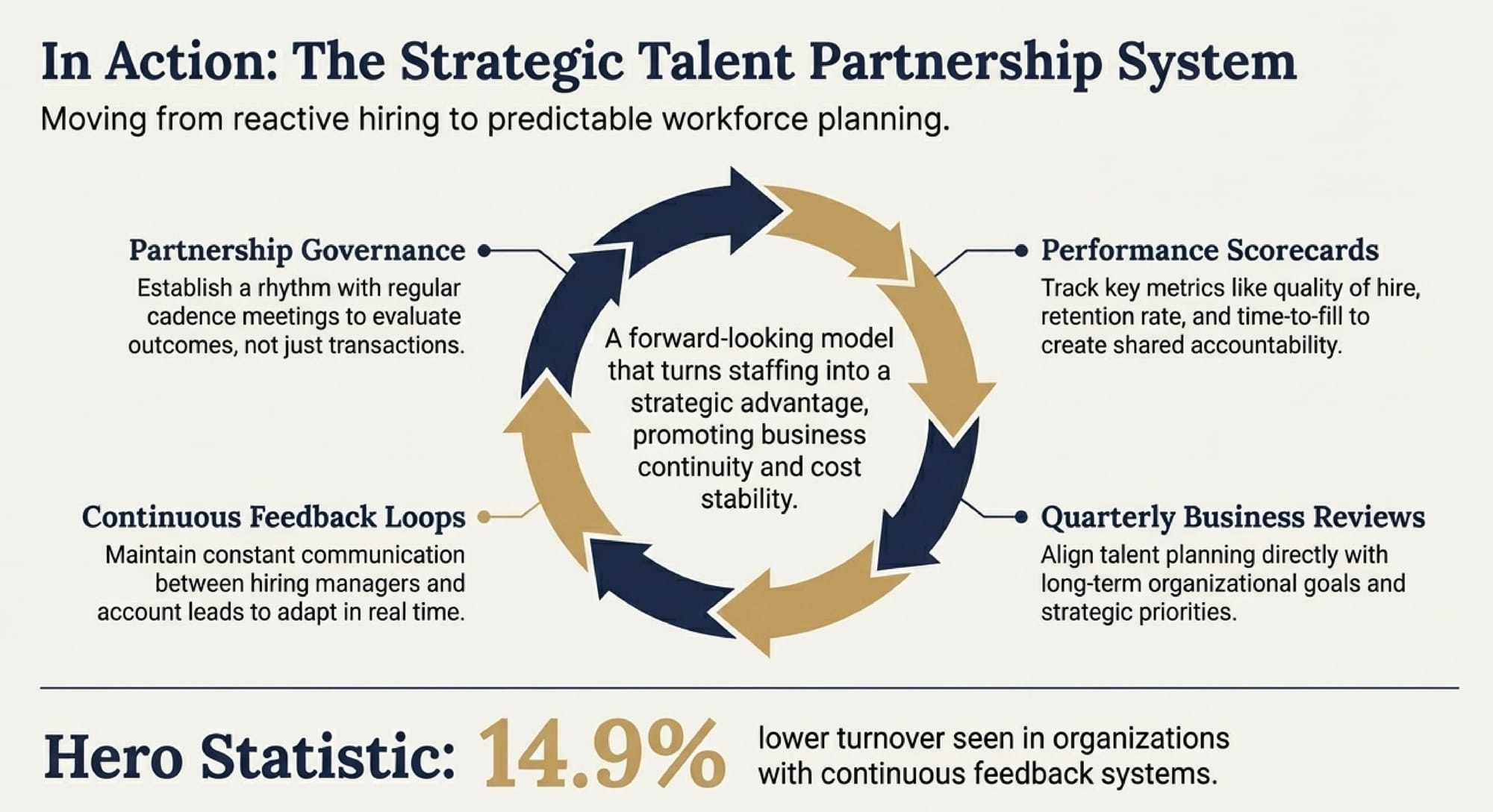
By implementing continuous feedback loops and performance scorecards, organizations can move toward predictable workforce planning. The results are measurable: organizations utilizing these continuous feedback systems see 14.9% lower turnover. This turns talent acquisition from a cost center into a forward-looking model that promotes business continuity.
The Intelligence Asset: A Unified System for Growth
When you combine these three principles, you aren't just following a list of tactics; you are building a single, integrated strategy.
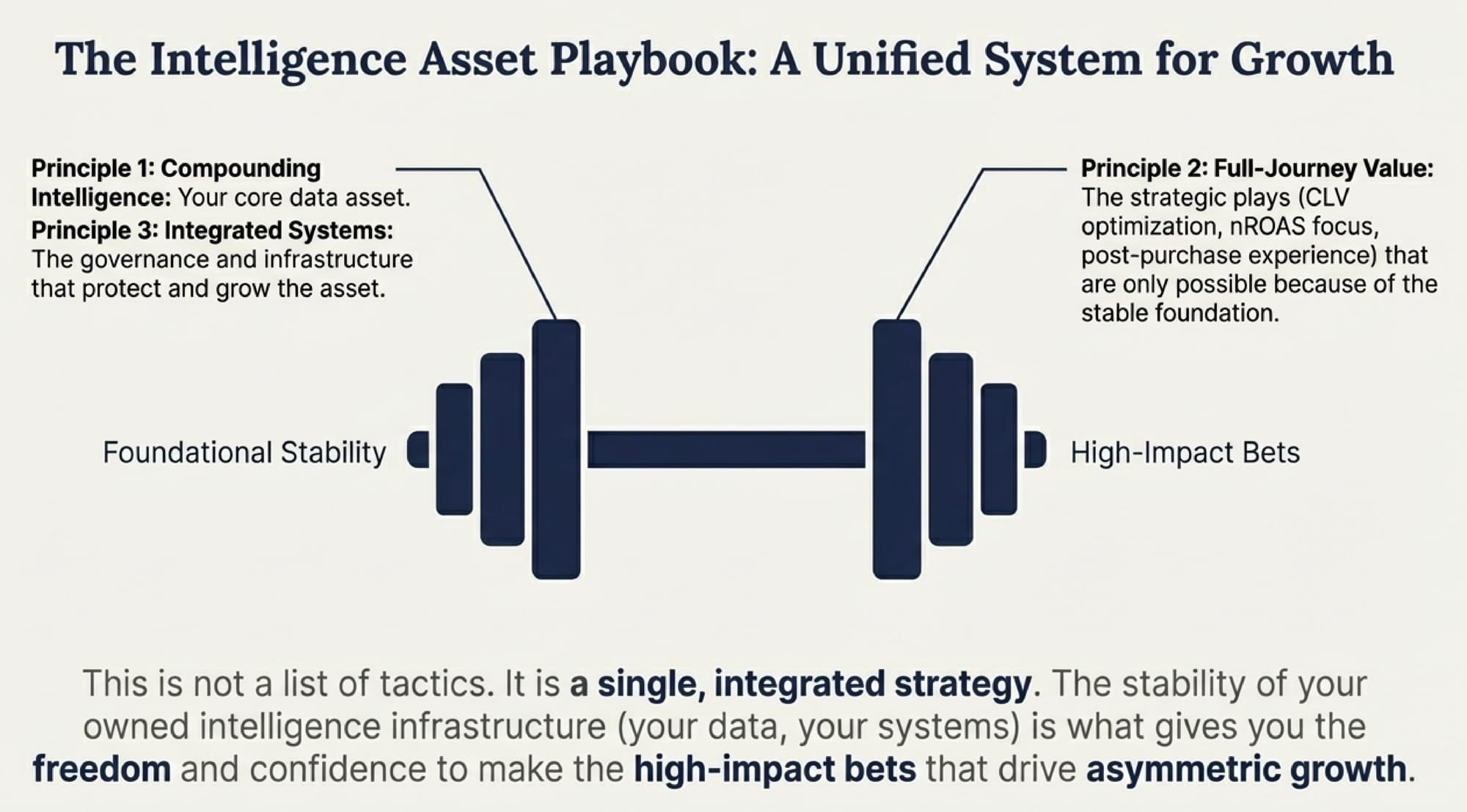
The Barbell Strategy creates a powerful internal synergy:
- Foundational Stability: Principle 1 (Compounding Intelligence) and Principle 3 (Integrated Systems) create the governance and data infrastructure that protect your assets.
- High-Impact Bets: This stable foundation gives you the freedom and confidence to pursue Principle 2 (Full-Journey Value) through asymmetric plays like CLV optimization and hyper-personalized outreach.
Conclusion: Starting the Transition
Building an intelligence asset is a strategic imperative, but it doesn't begin with a new software purchase. It begins with your leadership team asking the right questions.
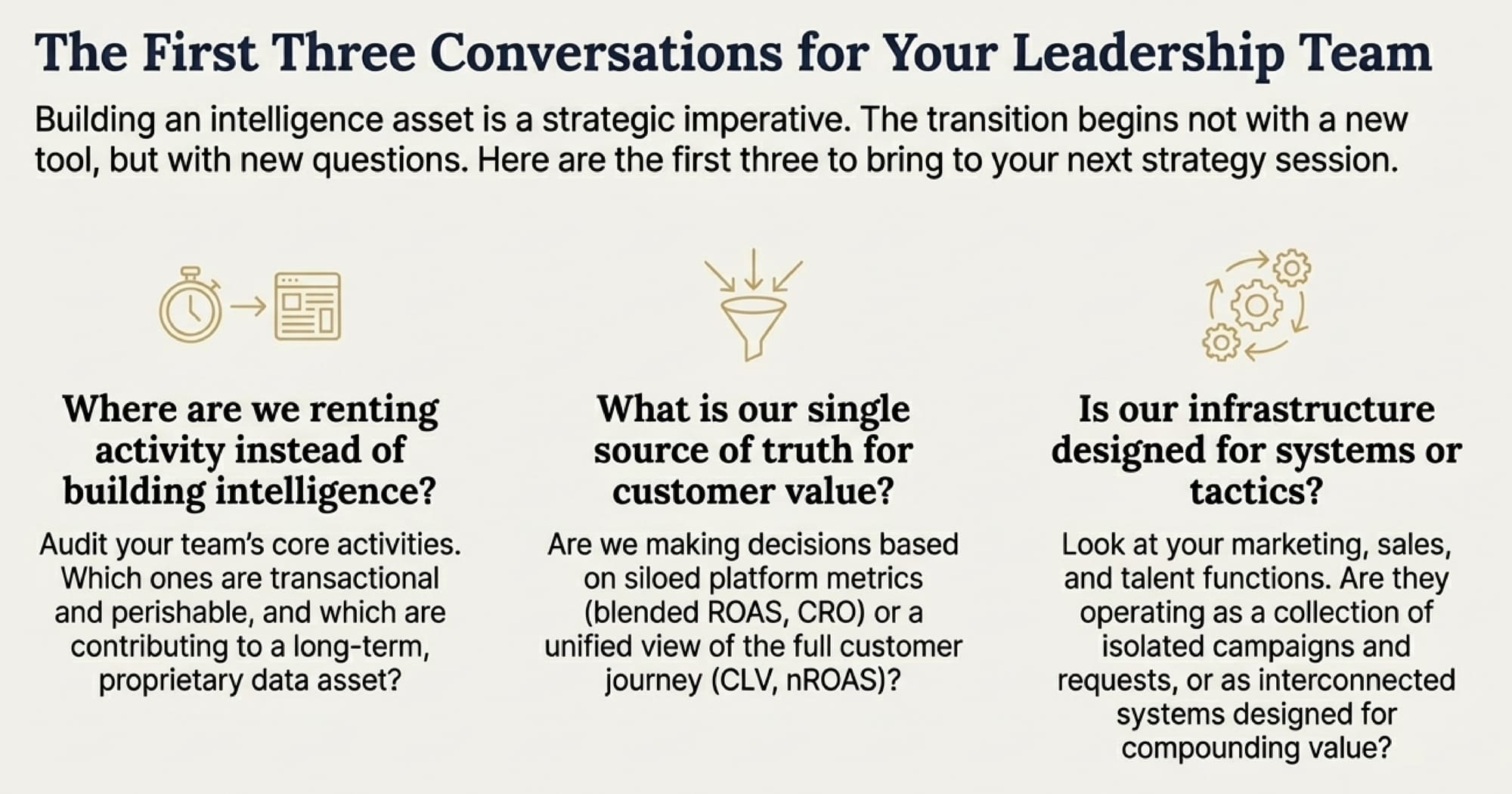
To move away from the "Activity Trap" and toward a compounding intelligence asset, bring these three questions to your next strategy session:
- Where are we renting activity instead of building intelligence? Audit which activities are merely transactional and perishable versus those contributing to your long-term proprietary data.
- What is our single source of truth for customer value? Determine if you are making decisions based on siloed platform metrics or a unified view of the full customer journey.
- Is our infrastructure designed for systems or tactics? Look at your marketing, sales, and talent functions to see if they operate as isolated campaigns or as interconnected systems designed for compounding value.
Are you ready to stop running the hamster wheel and start building your fortress?